
The Contemplative Sciences Center presents Faith, Play, and Practice: Analog Hour: a chance for students and community members to engage in hands-on and screen free activities in the Contemplative Sciences Center. Step away from your daily grind and enjoy a mid-week contemplative practice that engages your childlike sense of play. Facilitators will guide participants through a new exercise each session that encourages deep reflection and presence. Learn more about the spiritual significance of mindful moments and share a meal with the Theological Horizons community.
Participants will engage in a contemplative practice grounded in a meaningful theological context. Before beginning the practice, participants will mingle and partake in a small catered meal. A short reading will ground the activity in its potential spiritual significance for faithful participants. The group will then be led in a hands-on, analog activity which encourages deep reflection. To conclude the practice, participants will have the chance to discuss the impact of the time they spent and will write on a small piece of paper what the secret significance of this practice was in their lives.
Join Hunter Hollins, PhD student in Religious Studies and COO of the Fralin Museum of Art, on Wednesday, December 2nd from 3-4pm as he facilitates a workshop on visio divina (sacred viewing), exploring the contemplative and spiritual power of this ancient practice. Participants will experiment with “seeing” from a new place, not with your physical eyes, but with your heart.
Catered by Al Carbon. Free to the public. No reservation required.
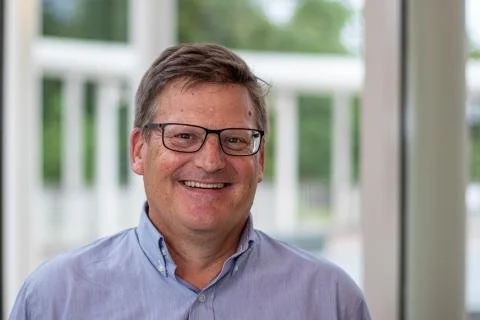
Hunter Hollins has thirty years of working in and with museums primarily within the United States. He is currently the Chief Operating Officer at the Fralin Museum of Art at the University of Virginia. Prior positions include the National Air and Space Museum, the National Gallery of Art, and the Smithsonian American Art Museum. His areas of study include Christian Theology, Process Thought, Cosmology, and Psychology.
Visio divina invites the viewer into "divine seeing." Visio divina shares roots with the ancient practice of lectio divina. (Lectio divina calls for a slow, careful interaction with scripture through meditation and prayer, allowing a word or phrase to rise in our consciousness, a holy word to savor and examine.) Similarly, visio divina invites us to encounter the divine through images. A prayerful consideration of and interaction with a photograph, an icon, a piece of art, or other visual representation allows the viewers to experience the divine in a unique and powerful way.